
Pest Control in Austintown, OH
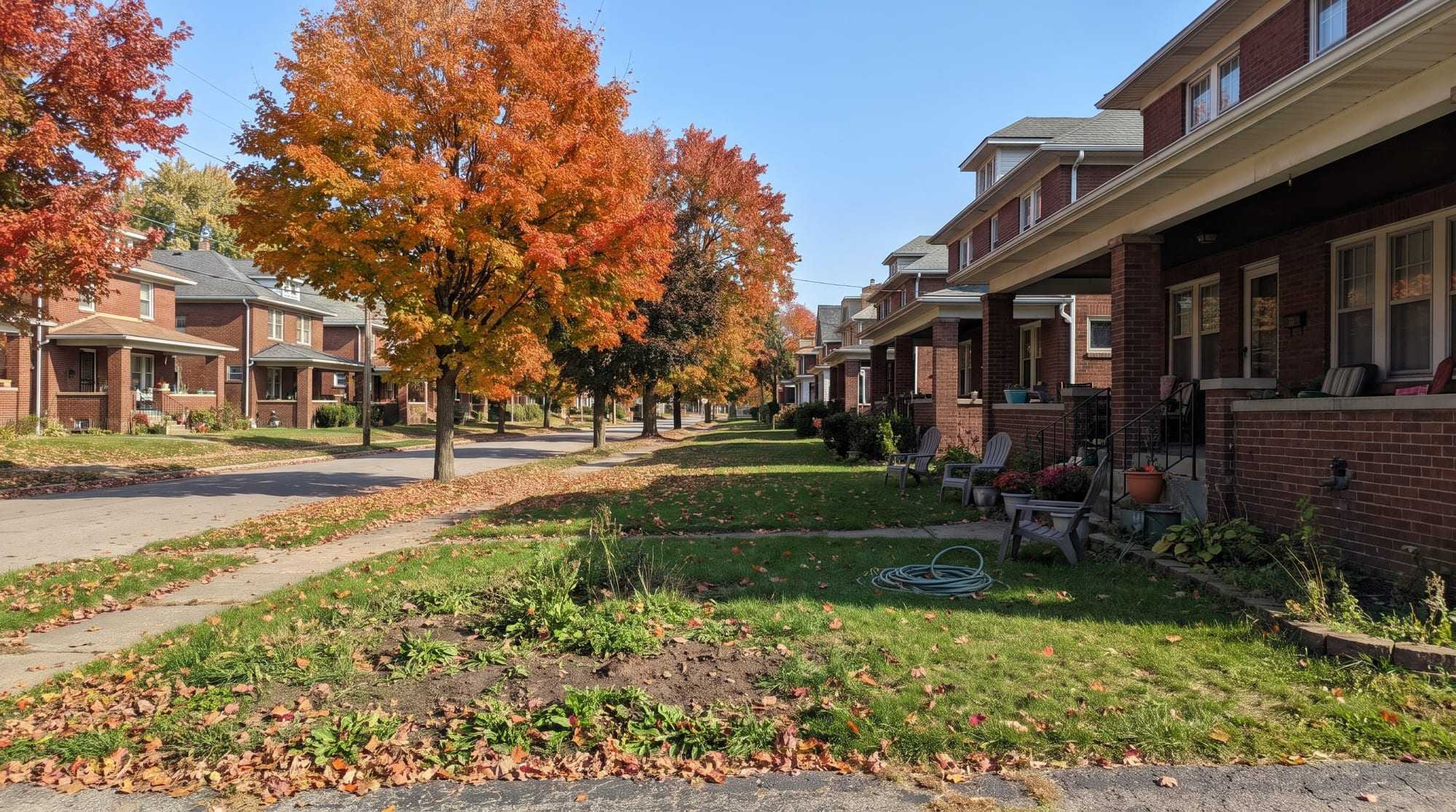
Ranch neighborhoods, newer subdivisions and the businesses along Mahoning Avenue, just west of Youngstown.
Austintown Township spreads west from Youngstown’s city line. Mid-century ranch neighborhoods sit closest to the city, newer subdivisions spread toward the west, and commercial strips line Mahoning Avenue. A one-story ranch, a two-story house on a new street and a restaurant in a strip plaza each draw different pests. Austintown addresses use ZIP code 44515, inside the company’s Service Area.
Mid-Century Ranches Close to the City

A mid-century ranch keeps everything on one floor, close to the ground, and that is where its insect trouble starts. Patios, driveways and front stoops are poured right up to the walls, and the joints between those slabs and the foundation crack over the years. Pavement ants and odorous house ants nest under the concrete and follow the cracks inside, often right after a heavy rain. Crush one of the small dark ants on the counter: a smell like rotten coconut marks the odorous house ant.
Beds of mulch along the foundation hold moisture through the summer, and basement window wells collect leaves and damp that draw the insects spiders feed on. A perimeter treatment along that line, with ant treatment aimed at the nest instead of the trail, works far better than spraying ants on the kitchen counter. Where a gutter has overflowed for years, the fascia stays wet, and carpenter ants move into the soft wood.
Newer Subdivisions on the West Side
A newer house is not a sealed house. Gaps are common where the utility lines, the air conditioning lines and the dryer vent pass through the wall, and garage door seals often need adjusting once the house settles. Where a subdivision backs onto a field or a wooded strip, field mice and ground-nesting yellowjackets have only a short trip to the yard. A new deck adds a shaded gap underneath, where paper wasps build under the rails and mice or rats nest out of sight.
Fresh landscaping brings pests of its own. Mulch beds, landscape timbers and new sod hold moisture against the foundation, which suits ants and, under the soil, termites. A new house is no defense against termites: a colony in the soil reaches the framing through a crack in the slab or the gap around a plumbing line. Moving into a house here, new or resold, is the right moment for a pest check on a new property, before boxes fill the basement and hide the corners.
Shops and Restaurants Along Mahoning Avenue
The commercial strips along Mahoning Avenue put restaurants, shops and offices side by side, often sharing walls, dumpster pads and delivery doors. German cockroaches travel in cardboard boxes and food deliveries, and mice settle in stockrooms and behind dumpsters. A tidy business next door to a busy kitchen can still see pests come through the shared wall. Sealing matters as much as treatment in these buildings: sweeps on back doors, gaps around pipes under sinks, and the openings where utility lines enter.
For a business here, recurring visits renew the perimeter treatment and keep watch on the traps and stations all year. That way, activity in a back room shows up early, long before a customer notices anything.
Mice and the First Cold Weeks of Fall
Austintown’s mix of housing gives mice two easy kinds of entry: older ranches with tired door sweeps and loose sill seals, and newer homes with unsealed openings around their line sets. Once fall nights turn cold, field mice from any nearby field or wooded strip start testing both. Inside, the first signs are usually droppings at the back of a kitchen drawer, chewed insulation in the garage or scratching in the ceiling after dark. Trapping clears the ones already inside, and exclusion seals the openings they used so the next batch has no way in. Closing those gaps ahead of the cold is the point of sealing before winter; trapping mice out of a finished basement in January is slower work.