
Pest Control in Boardman, OH
Mice, insects and stinging nests in Boardman’s ranch houses, split-levels and older homes near the Youngstown line.
Boardman Township grew fast after World War II, spreading south from Youngstown along Market Street and Route 224. Much of it is post-war ranch and split-level housing, with older houses near the Youngstown line and wooded lots where the township meets Mill Creek MetroPark. Each of those settings lets pests in a different way. Boardman addresses use ZIP code 44512, inside the company’s Service Area.
Boardman’s Ranch and Split-Level Homes
A post-war ranch looks tight from the street, but it has a long foundation to cover. The weak points sit low: the sill plate where the house rests on its block foundation, the holes where the gas line, the dryer vent and the outdoor faucet pass through, and the bottom corners of the garage door, where a worn seal leaves a gap a mouse can use. Birdseed, grass seed and pet food stored in that garage are often what draws the first mouse in.
A split-level adds a crawl space under part of the house, usually reached through a small door in the lower level. Crawl spaces stay dark, quiet and damp, which suits mice, ants and, now and then, termites working up a block wall. Sealing a split-level the way rodent control work does means going around the whole foundation, the crawl space and the attached garage included, not only the spot where the droppings turned up.
Older Houses Near the Youngstown Line
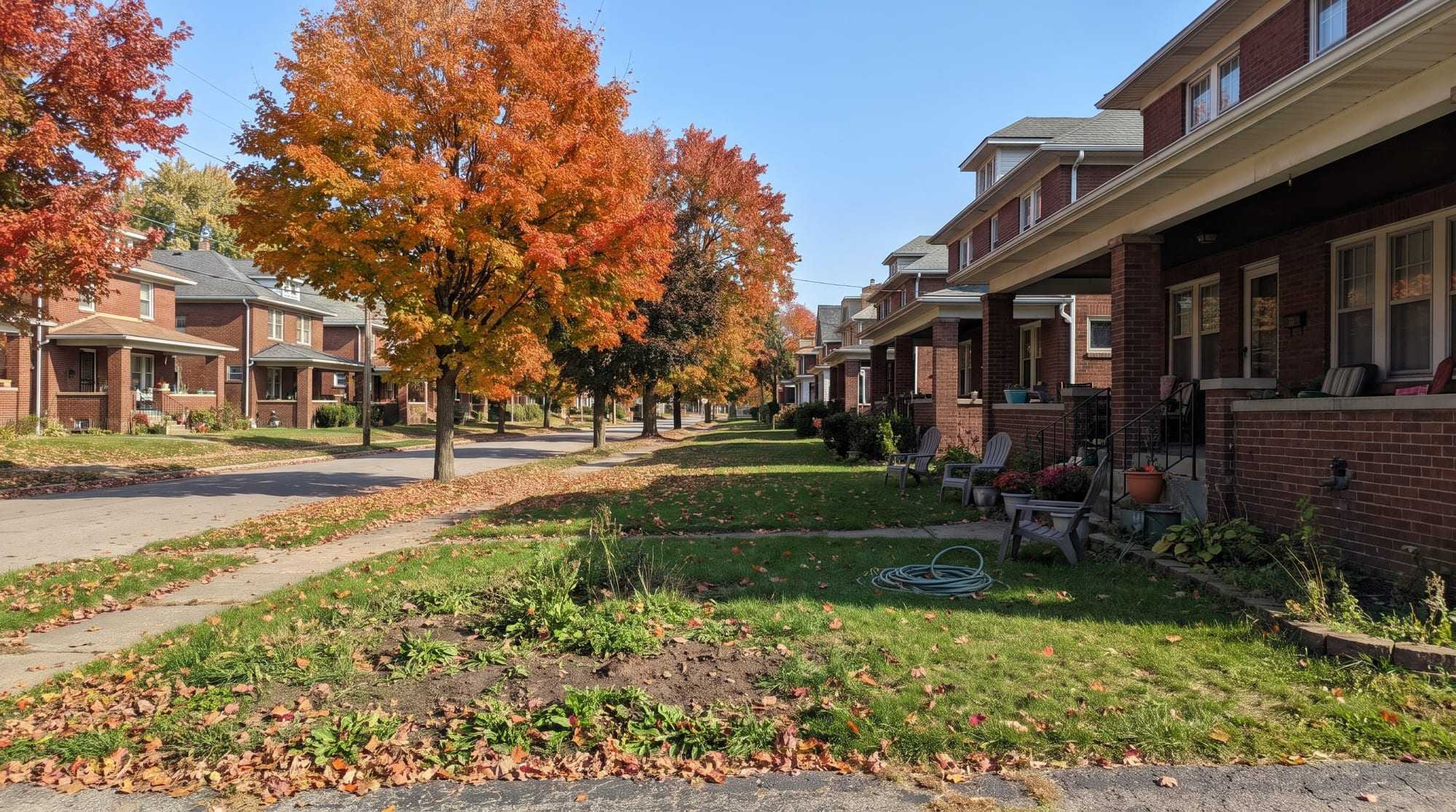
The north end of the township, close to the city, holds older houses than the ranch streets further south: brick, front porches, and foundations that have shifted over the decades. They behave more like city houses. Mice work through mortar joints and around old pipe openings, and the space under a porch collects leaves and damp that ants and spiders settle into. Older basements can also hide openings nobody uses anymore: a covered coal chute, an abandoned vent, an old pipe run through the block.
Age brings one more caution. A house built before 1978 may have lead paint, so sealing that means drilling, sanding or cutting painted trim calls for lead-safe work practices.
Wooded Lots Along Mill Creek MetroPark

Homes that back onto the woods of Mill Creek MetroPark, or onto any of the township’s wooded lots, live beside a steady supply of pests. Bald-faced hornets hang their paper nests in trees and under eaves. Yellowjackets move into old stumps and abandoned rodent burrows. Carpenter ants travel from dead limbs into damp siding and window frames, and in fall, mice from the edge of the woods head for the nearest warm foundation.
A few habits make a wooded lot less inviting: trim branches back from the roof, stack firewood away from the house, and keep mulch from piling up against the siding. A nest already hanging near a door or a play area is another matter. Wasp and hornet nests are safer left to someone with the right gear than knocked down with a broom. For a house that backs onto the trees, recurring visits make sense: the perimeter treatment stays fresh and the monitoring keeps going in every season, because the pressure from the woods never lets up.
Termite Inspections for Boardman Crawl Spaces and Porches
Termites start where wood touches soil. On a Boardman lot that usually means porch steps, deck posts and the wood framing over a crawl space, and the damp crawl spaces under split-levels give a colony cover while it works. The signs are easy to miss: thin mud tubes running up a foundation wall, wood that sounds hollow when tapped, and winged swarmers near a basement window in spring.
If you find a mud tube, leave it in place until a termite inspection. Breaking it open sends the termites elsewhere and hides the spot where they were coming in. Carpenter ants can leave similar damage, but they push out coarse sawdust instead of building tubes, and that difference changes the treatment.