
Mouse and Rat Control for Youngstown Homes
How to read the signs, where rodents get into older houses and why sealing matters as much as trapping.
A house mouse can squeeze through a gap a quarter inch wide, and a young rat through half an inch. Most houses have dozens of openings that size around the foundation, pipes and roofline, so a mouse problem rarely ends with the first few caught: the next ones use the same way in.
Cornersburg Pest Control handles mice and rats with trapping and exclusion. Trapping removes the animals already inside. Exclusion seals the gaps around foundations, pipes and rooflines that let them in.
Mouse or Rat: Reading What They Leave Behind
Mice live indoors once they find a way in. They nest close to food, in wall voids, cabinets, insulation and stored boxes. The rats that reach Ohio basements are almost always Norway rats, which burrow outside along the foundation, under porches and beside sheds and woodpiles, and come inside to feed.
The difference shapes the plan. A mouse walks into a trap on its route within a night or two. A rat avoids anything new and may step around a trap for days, so the burrows outside need attention too.
| Sign | Mice | Rats |
|---|---|---|
| Droppings | About ¼ inch, pointed ends, scattered along routes | ½ to ¾ inch, blunt ends, often grouped in one spot |
| Sounds | Light scratching and running in walls and ceilings at night | Heavier gnawing and thumping in the basement or under floors |
| Gnawing | Small, neat holes in boxes and food bags | Ragged holes in wood, plastic and pet food sacks |
| Outdoors | Rarely any sign | Burrows 2 to 4 inches wide along the foundation and under slabs |
Signs to Note Before You Call
- Noises in the walls at night. Which room and roughly what time.
- Droppings. Where, and how fresh: new ones are dark and soft, old ones gray and crumbly.
- Gnawed food packaging. Which shelf or cupboard.
- Greasy rub marks. Dark smears along baseboards, sill plates or pipes.
- Nesting material. Shredded paper, fabric or insulation in drawers or stored boxes.
Is it safe to sweep up or vacuum mouse droppings?
No. Sweeping or vacuuming dry droppings puts dust into the air, and that dust can carry disease. The Centers for Disease Control and Prevention recommends a wet method: air out a closed room or shed for about 30 minutes, put on rubber or plastic gloves, spray the droppings and nesting material with a disinfectant or a mix of one part bleach to ten parts water, and let it soak about five minutes.
Pick everything up with paper towels, bag it for the trash and wipe the area with the same solution. Then take the gloves off and wash your hands.
What health risks do mice and rats bring into a house?
Droppings and urine can carry salmonella and leptospirosis, and their dust can set off allergies and asthma. Hantavirus, a serious lung illness, comes mainly from deer mice and is rare in Ohio, but the same careful cleanup applies to every rodent mess. Mice and rats also chew wiring, a fire risk.
Entry Points in Old Stone, Brick and Block Foundations

Houses in the older Youngstown neighborhoods were mostly built before 1960, and their fieldstone, brick and block foundations have had decades to lose mortar and crack. Every utility line added since meant another hole through the wall. Mice follow the soft joints, the gap under the sill plate and the open cores of a block wall into the basement.
Exclusion closes those gaps with materials a rodent cannot chew through: copper or stainless mesh packed tight and sealed over, mortar in masonry and hardware cloth over vents. Expanding foam alone does not stop them; mice chew through it in a night. In a house built before 1978, drilling or sanding painted trim calls for lead-safe work practices.
| Entry point | Where it shows up | Usual way to close it |
|---|---|---|
| Mortar gaps in brick and block foundations | Crumbling joints near the soil line, open block cores, the seam under the sill plate | Mesh packed into deep voids, then mortar; block cores capped |
| Utility and pipe penetrations | Gas, water and cable lines, air conditioner lines, abandoned pipes | Copper or stainless mesh packed around the pipe, then sealed over |
| Dryer and attic vents | Missing louver flaps, unscreened gable vents, soffit gaps | A rodent guard on the dryer vent (fine screen clogs with lint); hardware cloth on attic vents |
| Garage door seals | A worn or chewed bottom seal, open corners at the jambs | A new bottom seal, corner pads and weatherstripping on the side jambs |
Trapping and Sealing as One Job
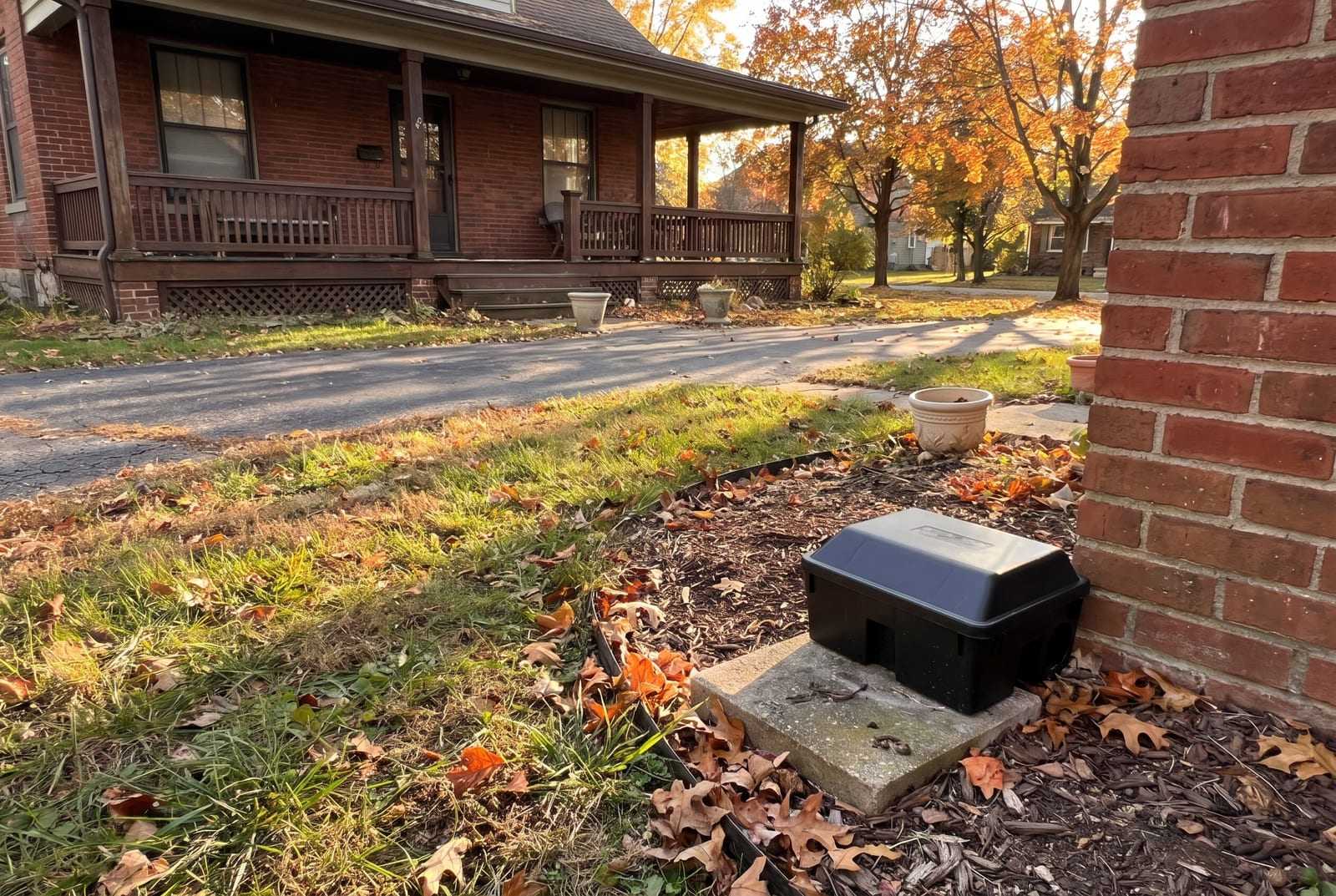
Rodents run along edges, so snap traps go along walls and behind appliances, at a right angle to the wall with the trigger toward it. Bait belongs only in locked, tamper-resistant stations outdoors, out of reach of children, pets and birds. Poison indoors is a poor choice: a poisoned mouse often dies inside a wall, and the smell lasts for weeks.

Sealing keeps the traps from refilling. An attached garage is a frequent route: the rubber seal along the bottom of the door wears, cracks or gets chewed, the corners never quite meet the jamb, and a mouse in the garage is one gap from the kitchen. A new bottom seal, corner pads and weatherstripping close that route, and the door into the house needs a sweep that meets the sill.
The order matters. Seal every gap with mice still inside and they chew a new way out through the walls; trap without sealing and the house keeps filling. The work starts with an inspection, and the steps after it follow Our Process.
Why do traps alone often fail to stop mice?
Because the house keeps letting new ones in. A trap catches the mouse in front of it, but the gap it used stays open, and its scent trail leads others to the same spot. Mice also breed fast, with several litters a year, so the few left behind rebuild the numbers quickly.
Sealing turns trapping from a running chore into a job with an end: once the gaps are closed, the traps catch the last mice inside and then stay empty.
Mice and Rats Through a Mahoning Valley Winter
Mice move indoors as fall nights turn cold, and a long Mahoning Valley winter keeps them there until spring; rats come in for food once the ground freezes. A house sealed in early fall has far fewer mice to trap in January, which is why sealing ahead of the cold pays off more than any trap set after the first snow.