
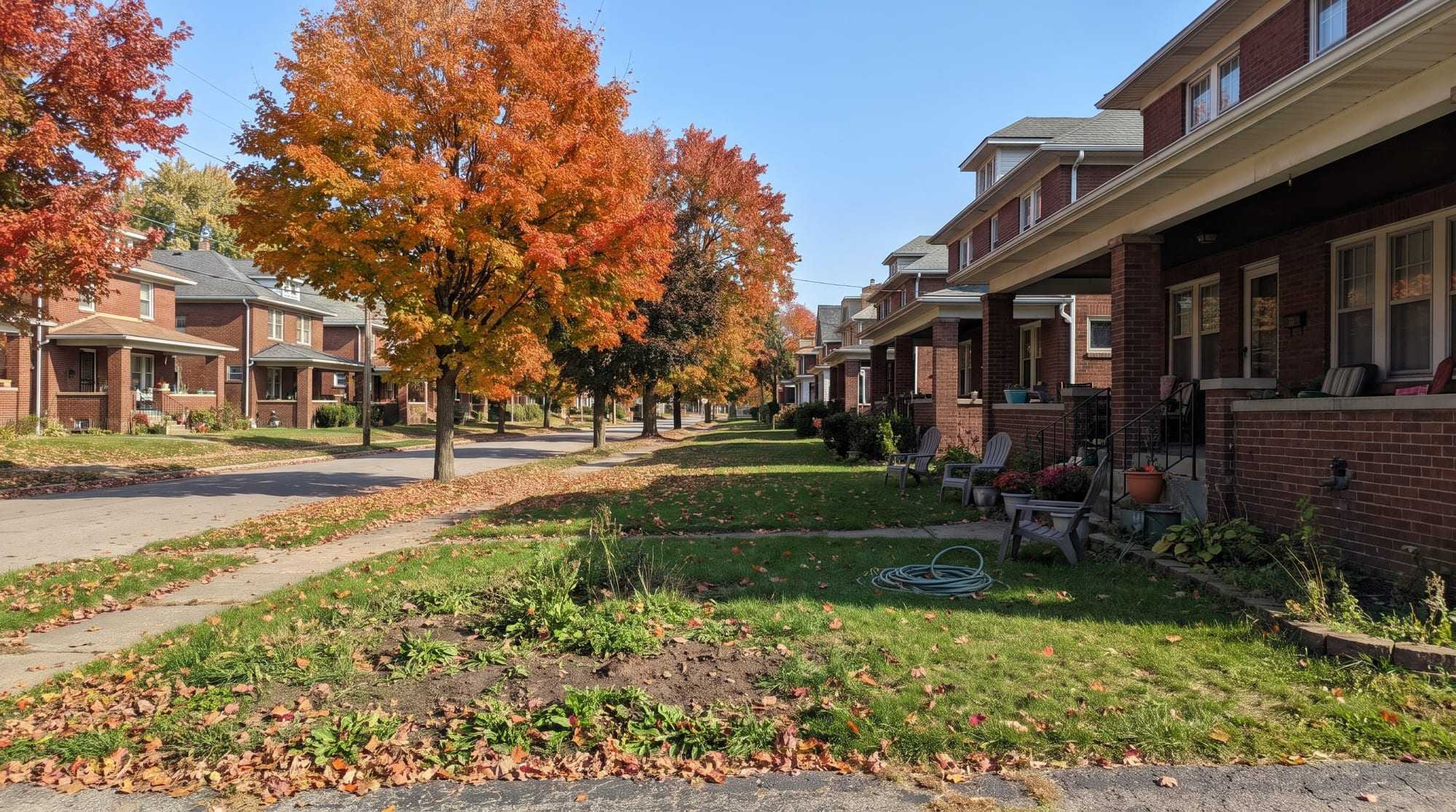
Pest Checks for a New Home or Rental in Youngstown
Find out what moved in while the house sat empty, before your boxes and furniture go through the door.
A house changes hands with more than its keys. Mice that nested while it sat empty, roaches in a damp basement, carpenter ants in an old porch post and wasps in the eaves all come with it. Each is easier to handle in empty rooms than after the family moves in.
What an Empty or Older House Can Hide
Vacant homes give pests quiet months. With nobody cooking or cleaning, mice settle into cupboards and insulation, and droppings pile up where nobody sweeps. Floor drains and unused sinks lose the water in their traps, which opens a path for cockroaches coming up from the drain lines.
Age adds its own entry points. Many Youngstown houses date from before 1960, and their stone foundations, wooden porches and damp basements open new gaps with every winter. Porch framing that sits close to the soil or stays wet draws carpenter ants and termites.
Signs a Previous Owner Leaves Behind
Walk through with a flashlight before closing or signing a lease, if the seller or landlord allows it, and write down what you find.
| Symptom | Likely cause | Fix |
|---|---|---|
| Droppings in the cupboards of a vacant home | Mice that moved in while the house sat empty, often through gaps around pipes or the sill | Clean up wet with gloves and disinfectant, never sweep dry; trap before food comes in, then seal the entry points. |
| Cockroaches in a damp basement | Oriental or American cockroaches living in the damp and coming up through dry floor drains | Refill drain traps with water, dry the basement out and seal around pipes; baits work where they travel. |
| Sawdust piles near wood | Carpenter ants hollowing damp wood in a porch post, sill or window frame; fine powder can mean wood-boring beetles | Find and fix the moisture, then have the wood and the colony looked at before repairs cover it up. |
| Wasp activity from the attic or eaves | Paper wasps or yellowjackets nesting under the eaves, in a soffit or inside an attic void | Stay clear of the entry hole and never plug it; have the nest treated, then seal the opening once it is dead. |
| Signs of bed bugs in used furniture | Dark spots, shed skins or tiny pale eggs along the seams of a mattress, couch or bed frame left behind | Keep the piece out of the living space, use no foggers, and have it inspected before anyone sleeps on it. |
Termite and Wood Damage Signs in Older Homes

Subterranean termites live in the soil and build mud tubes, about the width of a pencil, up foundation walls, piers and sill plates to reach the wood. Look along the top of the foundation, around support posts and anywhere wood touches soil or concrete.
Leave any tube you find intact. An inspector can open a short section to see whether termites are still using it, and a tube knocked down early hides that answer.
Wood that sounds hollow when tapped, paint that bubbles, or flooring that dips near a wall can all point to damage underneath. Carpenter ants leave a different trail: piles of coarse sawdust mixed with insect parts under a damp spot, with the colony somewhere behind it. Cornersburg Pest Control handles termite inspections and carpenter ants alike.
Checking the Basement, Attic and Crawl Space

These three spaces hold most of the evidence and get the least traffic. In the basement, look at the sill plate, around pipes and drains, and behind anything stored against the walls. In the attic, check the insulation for tunnels and droppings, and the eaves for old wasp nests.
A crawl space shows termite tubes, damp soil and rodent runs along the walls. Bring a strong flashlight, gloves and a dust mask, and never handle droppings or nests with bare hands. If a crawl space is too tight or wet to enter safely, leave it for the inspection.
Does a home inspection cover pests, or do I need a separate pest inspection?
A general home inspection is visual and broad. The inspector looks at the roof, the wiring, the plumbing and the structure, and may note droppings or damaged wood in passing, but finding pests is not the job.
A wood-destroying insect inspection is a separate, focused check for termites, carpenter ants and similar insects and the damage they leave. Lenders often ask for one before a loan closes, so ask your agent or lender early whether yours does. Neither report is a search for mice, roaches or bed bugs; a pest inspection of the whole house is how you find out about those before moving in.
Renting an Older Unit: Who Handles Pests
Renters face a different question: whose problem is it? In an older building split into units, mice and roaches travel through wall cavities, pipe chases and a common basement, so a problem in one unit rarely stays there.
Before signing, look under the sinks and behind the stove for droppings or roach signs, and ask the landlord how pest problems get reported and handled.
Who is responsible for pests in a rental, the landlord or the tenant?
In general, both have a part. Ohio landlords must keep a rental fit and habitable, which covers the conditions that let pests in and infestations that come with the building. Tenants keep their unit clean, take out food waste and report problems promptly, before a few mice turn into many.
A lease can add more, such as who pays when a tenant brings bed bugs in with secondhand furniture, so read that part before signing. This is general information, not legal advice; for a dispute, a local attorney or tenant advocate can say what applies.
Lining Up a Move-In Inspection
A move-in check follows Our Process, starting with a look through the empty rooms, the basement and the attic while nothing is in the way.
Access and Paperwork for the Inspection
- Get access to the basement, attic and crawl space. Ask the seller, agent or landlord to unlock hatches and clear the way.
- Gather the home inspection report. Notes on moisture, wood damage or droppings show where to look first.
- Hold off on used furniture and stored boxes. Keep them in the garage or outside until the house has been checked.
- Note any smells or sounds. A musty odor, scratching at night or a hum of insects inside a wall.
- Avoid foggers and bug bombs. They scatter roaches and bed bugs deeper into the walls and never reach the nests.